‘America: a dangerous blend of diversity and racism’

HUMAN 1
Not all diversity is good diversity.

It’s like you heard someone say, ‘This smoothie is a mix of powdered glass and fruit’ and you felt the need to say, ‘Not all fruit is fresh fruit’.

HUMAN 1
Actually, that’s not what I meant.

What I meant was hiring somebody from Saudi Arabia, praising yourself on diversity, then finding out they hate women and LGBT people.

Not all diversity is good diversity — there are plenty of people who come from diverse backgrounds who are bigoted as all hell.

As contemporary events seem to make more apparent by the hour, I don’t think one needs to scour as remote a place as Riyadh to find examples of those things.

The pews of rural Iowa and suburban Houston often underwhelm in their diversity though remaining overblessed in their capacity for hatred of vulnerable groups.

If I say some ‘diversity is bad because it may contain religious bigots’, and to make that meaningful I use it as an excuse to oppose diversity, it’s more likely I’m upset with the diversity or foreignness of them than the bigotry they may share with domestic homogeneous folk. Continue reading “‘America: a dangerous blend of diversity and racism’”

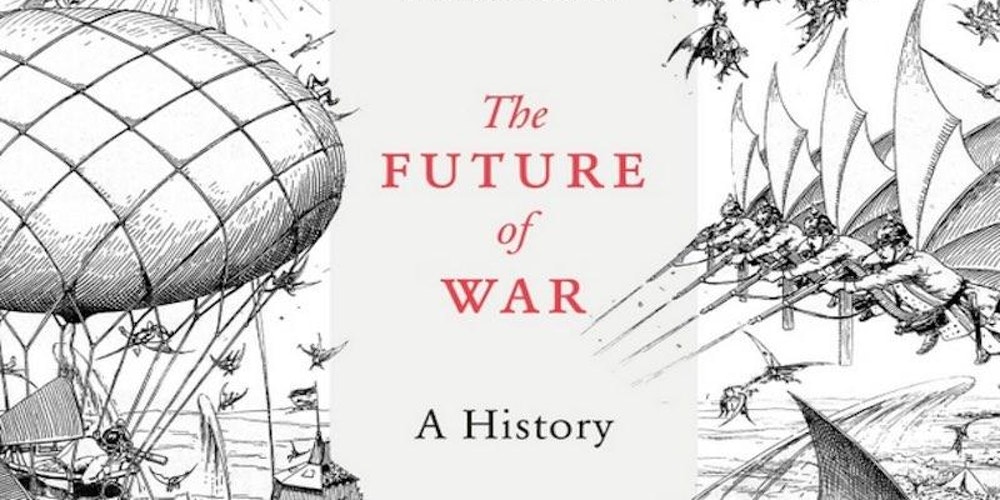
BOOK REVIEW: “The Future of War: A History” could be a bit more forward-looking

The saying “all is fair in love and war” has passed into platitude, but it’s true that with romance as well as bloodshed, we prepare for the next one mainly by worrying about the mistakes of the last conflict.

Lawrence Freedman’s The Future of War: A History is only about the more martial of the two human endeavors, but there’s a lot to love in it.

Across 287 pages of prose, Freedman’s book is part retro-futurism, part dissertation on the difficulties of determining what actually is a war and who died in one, and, finally, part looking forward at the sort of armed conflicts yet to come.

It doesn’t all fit together seamlessly, or read equally engagingly, but Freedman shows his homework regardless of topic, and there’s an additional 45 pages of notes and 28 pages just devoted to bibliography if warfare of the recent past, present, and future pique your interest.

For non-specialists, the most enjoyable portion is, thankfully, the first bit.

Continue reading “BOOK REVIEW: “The Future of War: A History” could be a bit more forward-looking”

U.S. Rep. John H. Reagan: A moderate pro-slavery advocate circa 1860

The Congressional Globe

The Official Proceedings of Congress, Published by John C. Rives, Washington, D.C.
House of Representatives, 36th Congress, 1st Session
Feb. 29, 1859

Page 924

The CHAIRMAN. When the committee rose it had under consideration resolutions of reference of the President’s message. On that question, the gentleman from Texas [Mr. Reagan] is entitled to the floor.

Mr. REAGAN. Mr. Chairman, I avail myself of the general range of debate, in Committee of the Whole on the President’s message, to discuss some topics which concern the whole nation. And, as I cannot expect to occupy the attention of the committee soon again under our rules, I shall have to try to discuss a greater number of questions than may be conveniently considered or clearly presented in one speech.

Continue reading “U.S. Rep. John H. Reagan: A moderate pro-slavery advocate circa 1860”

Texas named its counties for a lot of horrible people. Mathew Ector is one of them

As memorials to slavers and other Confederate heroes have been removed from public and otherwise challenged in recent months, a common complaint is that, by doing this, we’re forgetting our history or erasing it.

In my home county, we still have the historical marker its namesake:

Created February 26, 1887 from Tom Green County organized January 15, 1891, named in honor of Matthew Duncan Ector 1822-1879. Member of the Texas legislature a confederate officer and outstanding jurist Odessa, The County Seat.

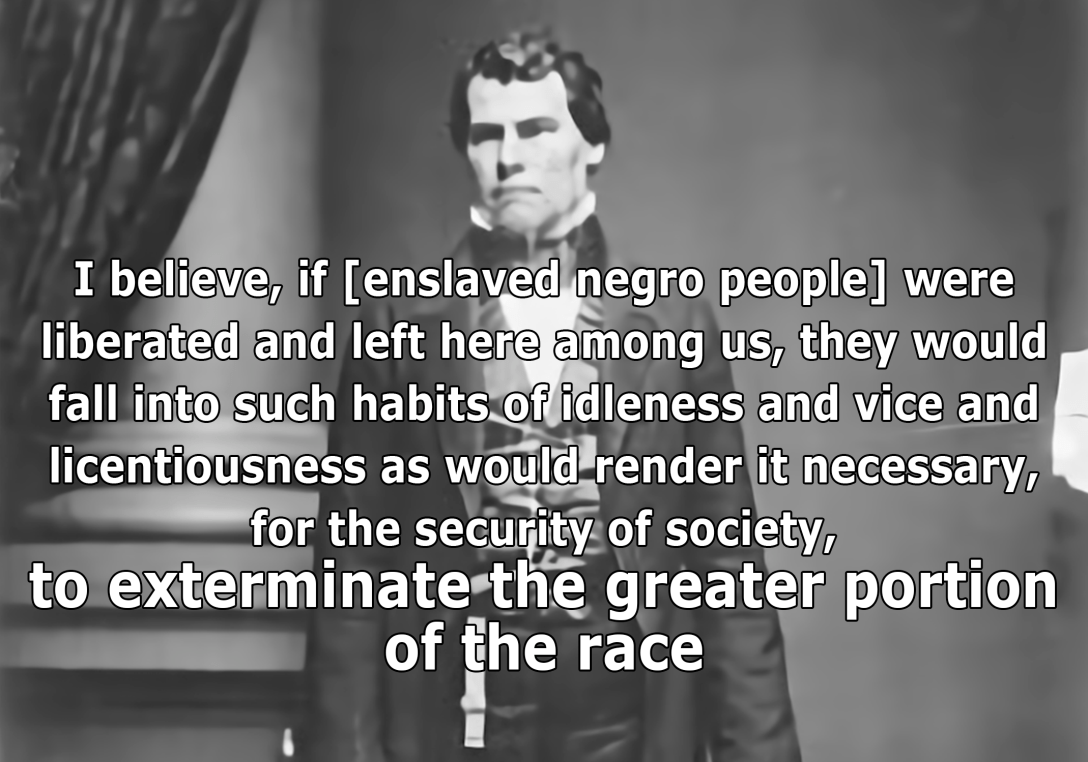
Indeed, Ector (his first name was actually spelled Mathew) was a Confederate brigadier general and later a Texas high court judge. As a jurist, he’s most notable for re-affirming racist marriage laws after Reconstruction.

In 1878’s Charles Frasher v. the State of Texas, presiding judge Ector wrote:

Continue reading “Texas named its counties for a lot of horrible people. Mathew Ector is one of them”

BOOK REVIEW: Bernie Sanders’ “Guide to Political Revolution” is more textbook than revolutionary

Someone—I don’t remember now who—described the major difference in American politics to be that the Left fetishizes being correct where the Right reserves that obsession for power.

For that reason, Republicans have been willing to abandon all previously stated principles so long as they can expect to have a warm body capable of signing regressive tax bills into law and who will nominate judges to protect conservative orthodoxies.

And it’s why a year and a half later, Democrats still get into fights about whether they supported Hillary Clinton or Bernie Sanders in the 2015-16 primary. It’s why many of us on the Left continue, inexorably, viewing contemporary events as a chance to re-litigate that contest and who was right.

So just to say, “Bernie Sanders: Guide to Political Revolution is for teenagers,” will invite cheap jokes along those lines, and merely by existing, it reinvigorates the conversation about who actually had the better fire extinguisher a year and a half ago, even as the grease fire continues to spread.

Continue reading “BOOK REVIEW: Bernie Sanders’ “Guide to Political Revolution” is more textbook than revolutionary”

BOOK REVIEW: We’ll be reading Zoë Quinn’s “Crash Override” to understand the Trump era for decades to come

In response to the recent Buzzfeed article about behind-the-scenes goings-on of Milo Yiannapoulus’ and Breitbart’s racism laundering, Washington Post journalist Philip Bump said, “An early chapter of every book documenting the Donald Trump era will be about Gamergate.”

If so, Zoë Quinn’s book Crash Override will be cited by nearly all of them as the autobiography of the person most affected by Gamergate and how she’s worked to defend everyone against online mobs since.

Continue reading “BOOK REVIEW: We’ll be reading Zoë Quinn’s “Crash Override” to understand the Trump era for decades to come”

Let’s talk policy: how do we fix police brutality and increase trust in police?

If we want to fix law enforcement, we first have to fix what we’re asking them to do on a daily basis.

We do want law enforcement to catch murderers, to investigate sexual assaults, to follow-up on robberies and burglaries, and to enforce things like domestic violence court orders so that we don’t have to resort to essentially tribal family or neighborhood alliances to do so.

But very little of a police officer’s job is actually doing these sorts of things because we as a society use them for all sorts of activities that even the best examples of society would strain to do well, and we’re not recruiting the best examples of society to police us now.

1. We have to decriminalize drug possession and use.

I can’t think of any single factor that has made cops lazier and more disruptive in communities than the ability to invade people’s homes or vehicles and arrest them on possession charges.

It’s completely atrophied the skills of policing that an officer ought to have, such as keeping violence down and de-escalating interactions because the reward is that you find something that is in itself illegal. It takes a lot of work to solve and then prosecute most crimes. Even burglars with stolen items have to be tracked down and work has to be done to establish that what they have was acquired by illegal means.

Prosecutors who have the option of pursuing multiple charges often use drug charges as leverage, either dropping them to get a plea to something else or using them to get an easy conviction. Easy drug convictions have likewise skewed the criminal justice system toward facile bullshit that punishes the poor and people of color while not doing anything to actually combat drug addiction or its effects.

2. We have to divorce revenue-gathering from law enforcement. 

If asset forfeiture were no longer tied to drugs, that would help in itself, but especially with traffic stops, officers are doing it because they’re expected by their city to get a certain amount of money in fines and penalties.

Now, there is a legitimate interest in our roads being safe, including making sure drivers aren’t intoxicated or distracted and that vehicles aren’t broken in some way dangerous to others. But a rich person has nothing to fear from speeding, and would rather just take the ticket every few months and pay it off than not get everywhere as fast as they want. As is well known, it ends up being a burden on the poor, often forcing them to pay to private companies far more than they would have otherwise, and allowing police to arrest them on warrants for unpaid fines. A

s with bail bonds, fines should be based on a person’s ability to pay them, similar to the Norwegian system, and this would immediately solve the problem because wealthy people would not want police to have an incentive coming after them to make up municipal shortfalls. 

3. We have to invest in non-violent emergency personnel.

People call police for all sorts of things that they’re not trained to do. Whether they have guns or just clubs, they’re not necessarily going to be equipped to handle mental welfare checks or people overdosing on drugs.

It may be possible to train all officers better until they are able to do these things, but there ought to be an opportunity for people who are unable to handle a situation themselves to call a professional to help without having it on their conscience that those professionals are likely to abuse or kill someone. It would be a dangerous job, but so is lumberjacking and nursing. Humans are capable of surprising virtue.

4. We have to invest in afterschool and summer school programs, personal housing for homeless people, and mental welfare in general.

If children have things to do, especially those most at risk because their parents can’t afford to pay money to look after them while the parents are at work, it will have an effect immediately on the sorts of petty crimes bored kids get into and into the future because they won’t be getting arrested and pushed further into a trajectory of anti-social behavior or developing skills useful for crime but not so much putting on a resume.

If homeless people have their own place to sleep and keep their things, if they can have an address to apply for jobs, if social services can be concentrated on those areas in particular, you’re spending money up front instead of having police be called to ‘deal with’ people asleep in front of businesses or “causing problems”.

And relatedly, we want to spend money on people dealing with issues of mental health before they need to go to the hospital or we jail them for crimes almost by definition we know they aren’t responsible for committing.

5. We have to be OK with having fewer police.

We can train them better, compensate them better, and hold those we do have to higher standards, but there will be fewer bodies available to do work that’s not a priority. As it is, insurance companies rely on police to determine who was at fault in traffic collisions, but if no one is seriously injured, maybe police aren’t able to do that.

Police reports for burglaries might have to be filed online, and graffiti or vandalism probably won’t lead to an officer coming out. That’s already a reality in many areas for other reasons, but it would have to become the norm.

6. We need local civilian oversight and a federal bureau devoted to police misconduct.

If we can do the other things to make it easier for police to do their real jobs, then we should be able to much more strongly punish them when they step out of line.

For smaller events, local civilian oversight should be enough. Complaints about an officer’s tone or use of force in an arrest should not be internal matters where we expect police to do the right thing among themselves. They’ve demonstrated they’re not trustworthy in that. A civilian oversight board would be complicated in its own right, but should operate on a standard of guilty until proven innocent when it comes to complaints.

By that I mean, if there’s a complaint about you and you “forgot to turn on” your camera when the interaction happened, that should be taken as evidence of malfeasance in itself. Police officers need to be Caesar’s wife in these things.

But, for more serious accusations and offenses, it should be a federal investigation, likely through the Civil Rights Division and prosecuted by Assistant U.S. Attorneys, because they’re the absolute best in the country and not beholden to local law enforcement to make their cases or be re-elected. In an administration like this one, we wouldn’t be able to rely on that federal bureau, but that would still be a step forward from what exists at present.

In return for federal criminal justice funding, local agencies would also need to report police-involved shootings and homicides, and use of force statistics, as part of their Uniform Crime Reporting numbers. To make it meaningful, if it could be demonstrated that these numbers were intentionally skewed by local departments, they’d be on the hook for back-pay, similar to lying about your unemployment. 


That’s not going to solve everything, but it would go a long way toward re-orienting the incentives of the people involved away from violence and abuse of people in favor of public safety.
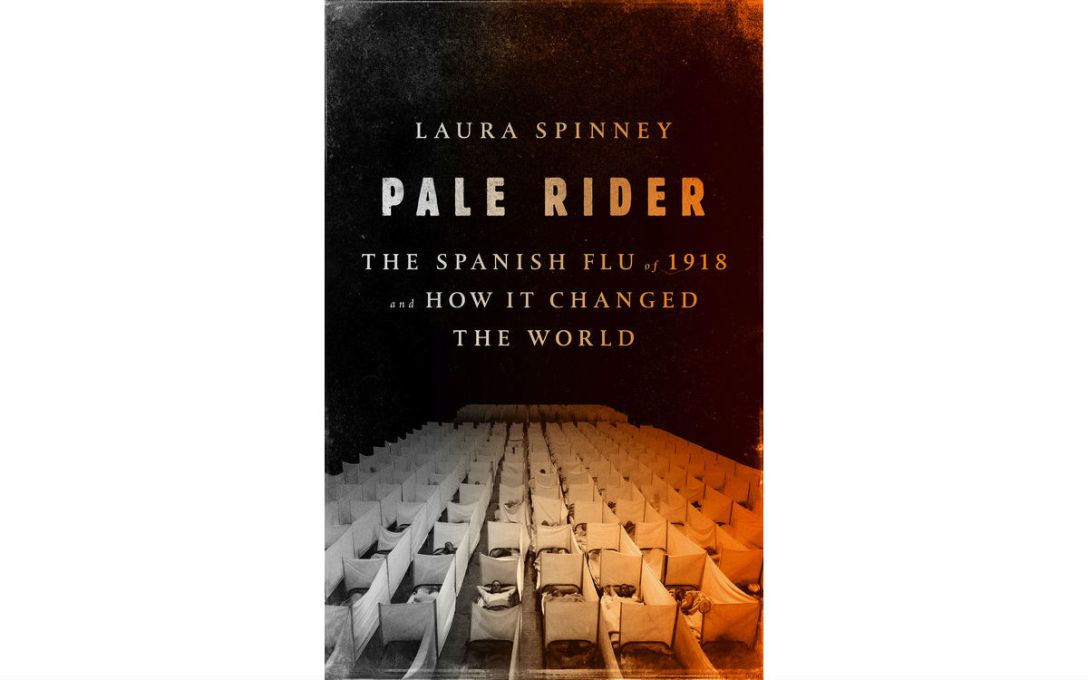
BOOK REVIEW: Laura Spinney’s Pale Rider re-examines 20th Century’s biggest tragedy

It’s become a standard bit of 20th Century trivia that as terrible as the First World War was, the 1918 Flu Pandemic coinciding with the armistice killed more than the conflict itself.

Now, an especially pedantic person might want to argue that WWI really was the beginning of the ‘Second Thirty Years War‘; they might treat as bookends both world wars—roping together all battlefield deaths, all civilian bombings, every atrocity and genocide, every preventable famine and epidemic. And put together as a single historical event, they would claim, all the misery springing from human malice between 1914 to 1945 led to up to 100 million untimely deaths in those three decades.

But, as British science journalist Laura Spinney relates in her latest book Pale Rider, the pandemic known in its time as the Spanish Flu (but definitely not originating in Spain) may have killed in three years about the same amount as we murdered each other during those 30, infecting one out of every three people on the earth while killing one-in-20 of the global population.

Continue reading “BOOK REVIEW: Laura Spinney’s Pale Rider re-examines 20th Century’s biggest tragedy”

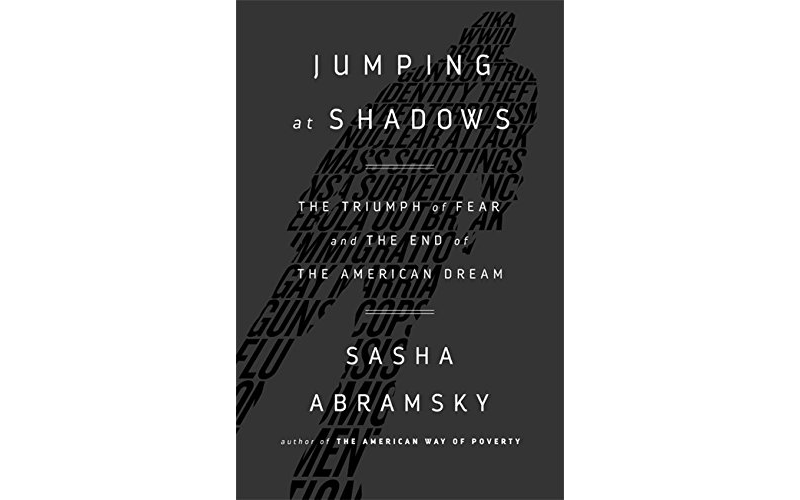
BOOK REVIEW: Sasha Abramsky’s ‘Jumping At Shadows’ is important but covers little new ground

Reggie Watts’ 2012 TED Talk had many unique observations, but one has always stuck with me as particularly insightful.

“As we face fear in these times—and fear is all around us—we also have anti-fear. The background radiation is simply too static to be able to be seen under the normal spectral analysis.”

That line of satirical pseudo-babble was part of an improvised comedy/musical performance but has achieved a surprising resonance in years since, and it’s as concise a summary of journalist Sasha Abramsky’s latest book Jumping At Shadows as the one it gives itself. Continue reading “BOOK REVIEW: Sasha Abramsky’s ‘Jumping At Shadows’ is important but covers little new ground”

‘Why are white people hated but Jewish people aren’t?’

HUMAN 0
They [Jewish people] benefit from the same institutional racism as white people, hold the same position of privilege, and—actually—look down on all gentiles, yet every time you mention this you’re instantly painted as anti-Semitic.

HUMAN 1
Jewish people are considered white people, but Jewish people can also experience anti-Semitism. Just as a white, gay man can be called white, he can also be harassed for being gay. The issue is entirely contextual.

I don’t think there are many Jews who would claim they have it worse in America than black people.

Adding to this, in the United States, ‘whiteness’ is a concept that expands and contracts as needed, always at the exclusion and in opposition to people identified as ‘black’. Italians and Greeks and Slavs are white now when, 100 years ago, to be white was explicitly in opposition to those groups.

Those groups have been allowed to escape from targeted discrimination and, in fact, now benefit from it.

Continue reading “‘Why are white people hated but Jewish people aren’t?’”