BOOK REVIEW: “Talk on the Wild Side” by Lane Greene shows how language is power

Lane Greene’s Talk on the Wild Side: Why Language Can’t Be Tamed came across, in its initial reading, as a scattershot collection of topics relating vaguely to the way the pronunciations, words, and grammars of languages will change with time so long as those languages continue to live and have people speak them. What makes the book really special, though, is the deeper theme: despite some people’s best efforts to pretend otherwise, decentralized changes are not just acceptable but inherent to language.

A Southern-born American journalist now living in London, the polyglottic Greene likewise moves through his topics with a comfortable, intelligible style, connecting otherwise disparate elements with threads that follow easily and ultimately tie together in a way that is truly something special.

What I’m not fully convinced of is whether this was intentional or something emergent from the subject itself.

Continue reading “BOOK REVIEW: “Talk on the Wild Side” by Lane Greene shows how language is power”

BOOK REVIEW: Peter Watson’s “Fallout” shows how the nuclear world we got didn’t have to be this way—and doesn’t

As the Justice Department investigations and Congressional hearings into Watergate closed in, Richard Nixon—as a brag—once said something to the effect of, “I can go into my office and pick up the telephone and in 25 minutes, millions of people will be dead.”

That was when he was sober. In the depths of his stress and depression, the U.S. president was also mixing alcohol and sleeping pills, and his natural paranoia became even worse.

“He really got paranoid when he got three drinks in him. There are things I’m not even going to discuss that were said, but they were the result of drinking. He could not handle drink,” one of Nixon’s political strategists said.

This is a man who semi-regularly “beat the hell” out of spouse Pat Nixon. Considering that more than half the mass shootings in the United States involve attacking a former or current romantic partner, it’s not implausible that a too-drunk Nixon might have gone too far hurting his wife and decided to kick off the destruction of humanity by picking up a phone to kill 70 million Russians half an hour later. Legally, there was nothing anyone might do to stop him, except perhaps invoke the just-passed 25th Amendment.

Otherwise, all United States presidents since Harry S. Truman have had and still have the legal authority to translate a vicious, narcissistic whim into genocide, and along the way, America’s nuclear arsenal grew so that power became omnicidal, capable of unilaterally ending all human life on earth without requiring any return shot.

Since the end of the Cold War and dissolution of the Soviet Union, the reasoning for that godlike authority remaining vested in a single person no longer exists: there is no longer a prospect of an unannounced first strike that’d have no ability to respond to without deliberation.

Yet, by inertia, the imperial presidency of the United States still has this capacity, and it seems unlikely any White House willingly would devolve such a power back to a legislature or extend the process to involve oversight and review.

As a candidate, publicly and presumably as a president, privately, Trump has expressed some befuddlement at the idea of the United States having nuclear weapons but not being able to use them except in a retaliatory exchange. Our only reassurance is that he’s said a lot of things on nuclear weapons; we sleep at night assuming the best interpretation of those inconsistencies and not the worst.

The Roman emperor Caligula thought he was a god, but Caligula couldn’t end the world in reaction to an especially scathing sketch on a re-run of Saturday Night Live.

* * *

Time’s arrow being such as it is, cause and effect being understood such as they are, each discrete step makes sense from conceptualizing the nucleus of the atom and discovering fission to release theretofore unimaginable energy, all the way till now where all trace of human achievement rests on one emotionally brittle septuagenarian not exercising his veto on the existence of complex terrestrial life.

Young Millennial and Gen Z humor tends toward a particularly absurdist flavor of nihilism, which dovetails quite well with our entire conscious lives involving inescapable, looming murder—from mass shooters to nuclear catastrophe—for no reason other than “that’s just the way it is”.

People with power could make direct and obvious changes for the better, but the status quo is easier and most benefits those who currently have power.

So here we are.

* * *

Continue reading “BOOK REVIEW: Peter Watson’s “Fallout” shows how the nuclear world we got didn’t have to be this way—and doesn’t”

BOOK REVIEW: “The Empty Throne” makes a better argument for not having one

I’ve said before there’s a seductive idea that some more competent version of American hegemony was once in effect and is desirable to return to.

Without meaning to, what Ivo H. Daalder and James M. Lindsay book The Empty Throne: America’s Abdication of Global Leadership seems to persuasively advocate for is how bad of an idea it is for the United States to have a throne at all when the person in it is as likely as not to wield that leadership destructively.

Continue reading “BOOK REVIEW: “The Empty Throne” makes a better argument for not having one”

BOOK REVIEW: The adults in the room have always been “Reckless”

In the Mel Brooks parody, “Space Balls”, the villainous character Darth Helmet brags to Lonestarr, the protagonist, that, “Evil will always triumph because good is dumb.”

This trope appears in fiction often, and some writers rely on it almost entirely.

The medievalist historian and culture critic Steven Atwell has observed that one of the central differences between George R.R. Martin’s worldview in the fantasy book series A Song of Ice and Fire and that of showrunners David Benioff and D.B. Weiss in the HBO adaption Game of Thrones is that Martin will stack the cosmic deck against his “good” characters to give them more adversity while D&D treat nobility itself as a handicap, where evil is synonymous with competence, cunning, with a willingness to make the hard and necessary choices.

The early 21st-century genre of “prestige television” with its white male anti-heroes is predicated largely on this worldview, from Vic Mackey in The Shield to Frank Underwood in House of Cards, but it continues today and goes back to Kurtz in Apocalypse Now and beyond.

In contemporary reality, though, we have a president and administration that is an ever-overlapping Venn Diagram of racists, incompetents, and grifters rapidly approaching a perfect circle with every new cabinet departure and replacement.

Recently, that administration announced that Vietnam War refugees who’ve been living in the United States for 40 years or more are now subject to deportation. We can and should condemn that as yet another example of ethnic cleansing that it is. It’s the sort of behavior that’s cartoonishly evil except for that it’s actually happening and hurting real people.

That we are currently ruled by schmucks does not make their sadism less painful.

At the same time, there is a syrupy-sweet voice talking from the corners of New York Times opinion columns and conservative “former Republican luminaries” that suggests that everything could go back to normal if we just had the adults back in charge, that if people were a bit more civil and subtle as they went about pursuing policies that irreparably harmed marginalized people, and if they didn’t tweet rude, misspelt things, we’d all be OK.

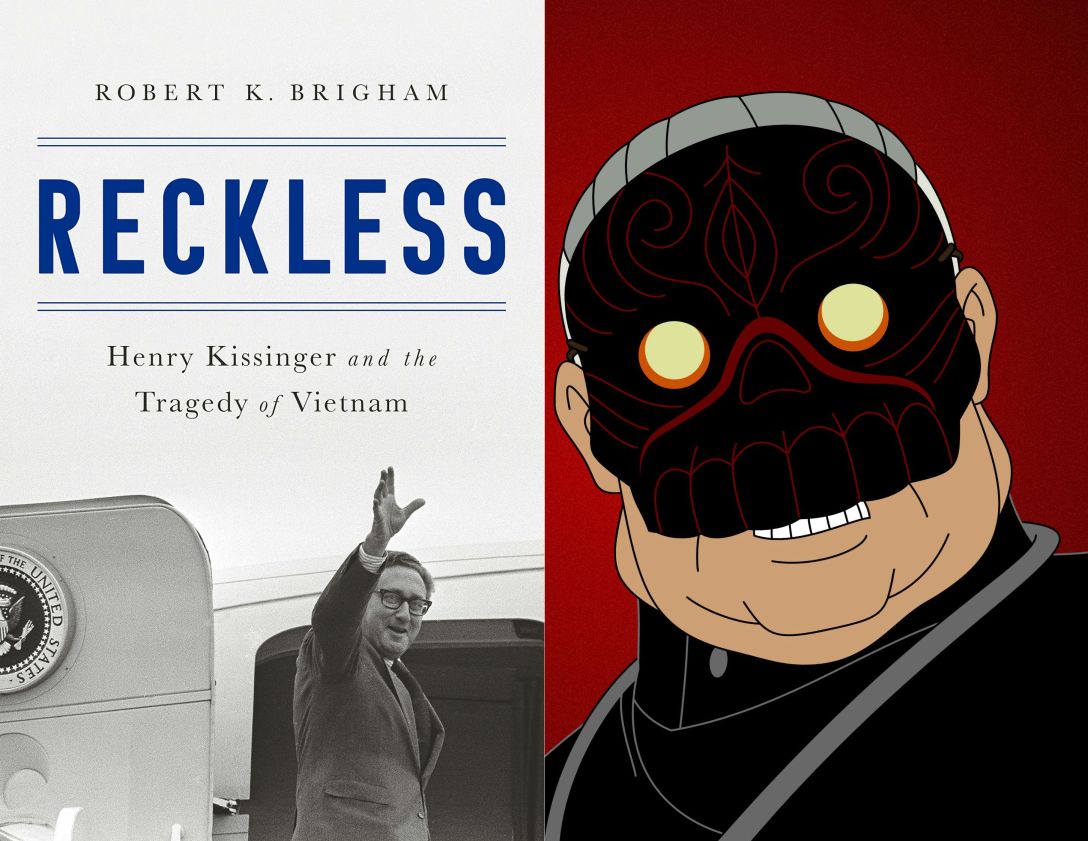
Reckless: Henry Kissinger and the Tragedy of Vietnam by Robert K. Brigham is a great corrective on that impulse.

Continue reading “BOOK REVIEW: The adults in the room have always been “Reckless””

BOOK REVIEW: In “10 Strikes”, Erik Loomis demonstrates how American labor history is inseparable from American politics

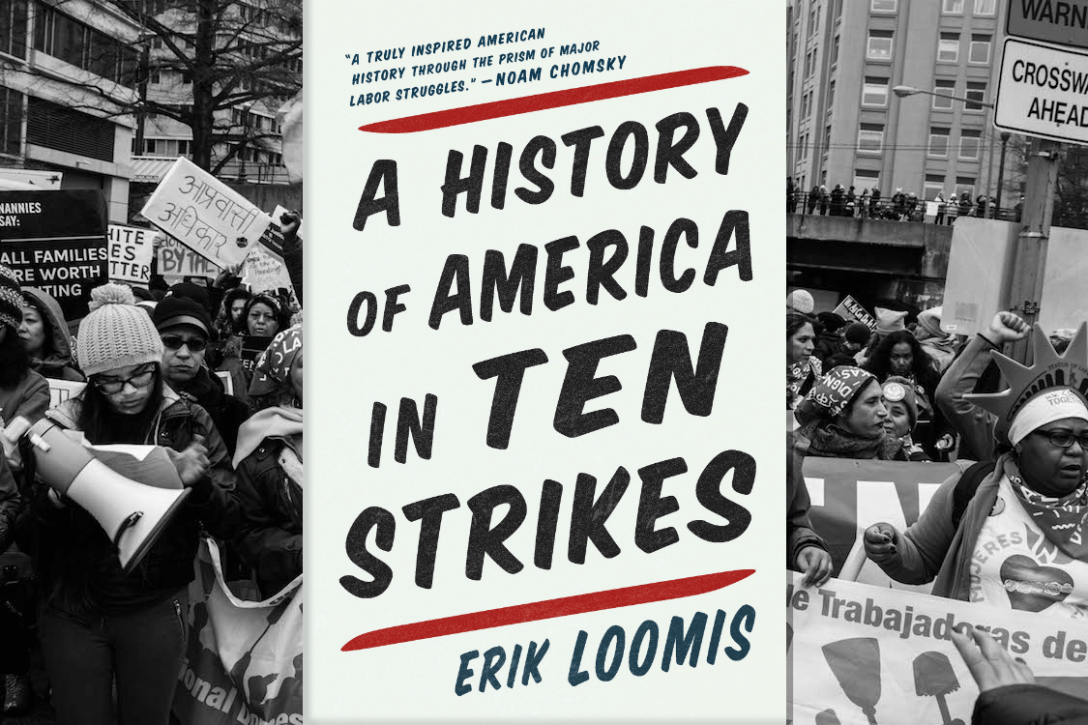
Your short takeaway should be that A History of America in 10 Strikes is a good book in all the ways a history book can be good. You should buy it. You should read it. You should gift it to your friends and family, and stuff extra copies in Tiny Libraries you come across.

The author Erik Loomis is a professor at the University of Rhode Island and regular contributor to the politics and culture blog “Lawyers, Guns, and Money“, and he’s been writing his This Day In Labor History” series for some time. It’s not surprising that he was able to bring the same sort of conversational brevity to this full-length work as he managed on Twitter threads, but it’s impressive he was able to tie almost two centuries of history all together so coherently.

Now, Loomis has a point of view, and he states it outright and upfront: almost everyone in the United States is a worker, and labor unions have been the only force for workers in the past two centuries.

What’s enlightening is his thesis, hammered in time and again, that “the fate of labor unions largely rests on the ability to elect politicians that will allow them to succeed.”

Continue reading “BOOK REVIEW: In “10 Strikes”, Erik Loomis demonstrates how American labor history is inseparable from American politics”

BOOK REVIEW: It’s a lot easier to kick someone out into the rain than fix your own leaking roof

You’ll often hear, in reference to current events, that the Republican Party has its origins in the anti-slavery movement of the mid-19th century.

This is, strictly speaking, true, but bowdlerized.

The best an abolitionist Liberty Party candidate ever did for president was 2.3 percent of what was then the popular vote in 1844.

The Free Soil Party was anti-slavery but only in so much as it disliked enslaved people. It got 10.1 percent in 1848.

The Know Nothing Party didn’t care for slavery but what really got it going was anti-immigrant nativism, contemporarily aimed at Irish and German Catholics. In 1856, it got 21.5 percent of the vote, still only good for third. By then, the Republican Party was competing on a slogan of “Free soil, free silver, free men.”

Abraham Lincoln won the presidency as a Republican with less than 40 percent of the popular vote four years later.

Continue reading “BOOK REVIEW: It’s a lot easier to kick someone out into the rain than fix your own leaking roof”

BOOK REVIEW: “How to Democrat in the Age of Trump” by Mike Lux is a suspiciously good read

You always ought to be wary of any point of view you consume at length where you find yourself agreeing with it completely, where it anticipates every question that pops in your head and answers it, to the point that at the end you can identify no daylight between your thoughts and its own.

The effect is something like riding to the airport after you’ve doublechecked everything you meant to pack and finding it was actually all already there. There’s no rational reason for you to be unsettled rather than comforted, but somehow you are.

Mike Lux has a written just such a book: How to Democrat in the Age of Trump, and it’s worthy of being recommended to anyone on the Left trying to find a way forward.

Continue reading “BOOK REVIEW: “How to Democrat in the Age of Trump” by Mike Lux is a suspiciously good read”

BOOK REVIEW: In the future of “Unscaled”, AI will keep the rich different from you and me

“The rich are different from you and me.”

“Yes, they have more money.”

No exchange like that between F. Scott Fitzgerald and Ernest Hemingway ever took place, but it’s a lot more fun to imagine that it did. The initially curt put-down contains within it the germ of a much more intense concurrence the more you think about it.

Unscaled by Hemant Taneja, or “How AI and a New Generation of Upstarts Are Creating the Economy of the Future” manages to embody both readings of that exchange.

The multimillionaire venture capitalist’s book often reads like a literal vanity-press product, talking of its subjects as an excuse to brag about all of the occasions Taneja’s investments thus far have paid off. That includes investments you’ve heard of like the temporary-messages app Snapchat as well as those you probably haven’t, like the “consumer digital health company“, Livongo.

In that way, the experience of reading Unscaled is very much like anyone who’s ever been cornered at a house party by someone you’ve just met, quite sure everything they do will be as interesting for you to hear as it clearly is for them to recount.

But, the rich are different from you and me, and what interests Taneja versus what does not is almost like reading an alien species talk about the implications of technology for the future.

Continue reading “BOOK REVIEW: In the future of “Unscaled”, AI will keep the rich different from you and me”

BOOK REVIEW: “Activism, Inc.” and the sin of ideals procrastinated

There’s never a good time to tell people about how their sausages are made, but Dana R. Fisher’s “Activism, Inc.” came out at just about the worst time possible for its message to be heard.

Part research, part hunchy anecdote, this short work is largely a post-mortem on the failures of paid, third-party canvassing operations, especially as connected to the Democratic Party and progressive Left that used them during the 2004 Presidential Election between John Kerry and George W. Bush.

Democrats relied on paid—but still highly intrinsically motivated—mostly young canvassers working out of temporary offices around the country to mobilize voters quickly. Meanwhile, Republicans tapped more permanent civic institutions for mobilizations, such as white evangelical churches.

For Democrats, Fisher concludes, “very few enduring connections remain at the local level after campaigns are concluded that can be used in the next campaign cycle”. Unlike volunteers, people who rely on wages to do election work can’t be expected to show up when the money isn’t there.

Continue reading “BOOK REVIEW: “Activism, Inc.” and the sin of ideals procrastinated”

BOOK REVIEW: “The Storm Before the Storm” and the seduction of lessons from history

We have a tendency to look at the past as a mirror, to see ourselves reflected in it rather than recognize the past as a foreign country — even when, indeed, it’s both.

This leads to methods of historical divination that try to read the past closely and thoroughly enough that the present is entirely recognizable and therefore the future will be foreseeable.

Sometimes this is presented merely in aphorism (“history repeats”, “it rhymes”, “people repeat history”); sometimes pseudo-scientifically (“these are the six economic indicators that will predict the next president”). Previous societies would sacrifice animals on an altar and from their entrails suss out messages they already wanted to find. We’re much more advanced nowadays, so we substitute cherry-picked data in place of viscera.

Roman history, though, is especially at risk for this sort of confirmation bias because there is so very much of it and it influenced so many successor states, all of whom could reasonably claim to have inherited part of its legacy.

As much as anyone, the United States has intentionally drawn those same parallels since our very founding.

Rejecting absolutism, we were a republic with the highest ideals of personal liberty, representation, and equality under the law. Yet, like the Romans, we only cared to extend this to some, and freedom didn’t preclude seizing territory by conquest or wiping out whole peoples. In Rome’s Italian territory, perhaps a quarter of the total population was enslaved at its height. In the Deep South, it was more like half.

When hobbyist podcaster, now graduated to a professional popular historian, Mike Duncan set out to write his 2017 book The Storm Before the Storm, he admits he went into it with an eye toward resonant parallels between Rome and the United States. Continue reading “BOOK REVIEW: “The Storm Before the Storm” and the seduction of lessons from history”