‘Seveneves’ by Neal Stephenson is two-thirds of a really good book

The other day I finished the latest Neal Stephenson novel Seveneves, and the amazing thing about it is how consistent he is with everything he writes, at least that I’ve read.

Maybe 15 years ago I read Snow Crash, and my impression with that book have been the same as The Diamond Age, which is still my favorite thing he’s done, as well as Cryptonomicon, Anathem, and now Seveneves. Stephenson is a really good writer and researcher. He takes ideas from all kinds of disparate areas and puts them together in a way that is easily understandable and doesn’t feel slapped together, even if paragraphs or pages of info will be dumped on you throughout. The plot is going to get going quickly and give you a reason to keep turning pages to find out the next thing that’s going to happen, but ultimately, it won’t culminate so much as have a bunch of stuff just happen all at once.

Continue reading “‘Seveneves’ by Neal Stephenson is two-thirds of a really good book”

Racism in /my/ death penalty? It’s more complicated than you think

HUMAN 0
Ron Paul says death penalty trial fueled Texas county’s tax hike – “It is hard to find a more wasteful and inefficient government program than the death penalty.”

HUMAN 1
I’m not even going to dance around it and try to say there’s some other reason.

I think if you kill somebody with the intent of doing so, you deserve to die.

And I’m not the only one who thinks this way, obviously.

The 4 percent of people executed being innocent is misquoted and here is the study it is misquoted from. Another misquoted number is 1.6% of people on death row since 1973 have been executed and later exonerated. This is not true: 1.6% of people on death row since 1973 have been exonerated, not executed and later exonerated.

Everything I have said is my opinion, you don’t have to agree with it, I don’t expect anybody to, but damn, calm down.

And to address some very thoughtful concerns on who kills the executioner, we don’t need to be smart asses, obviously nobody kills the executioner. I think that about covers it.

As the death penalty is applied in the United States, it’s more likely to be used if you’re a minority and poor than white and rich, regardless of other facts of the case.

In addition, whatever abstract sense of justice you may have about it, the utilitarian effect doesn’t seem to exist. Texas is not a less violent state than all others for executing more people than all others. In fact, nations that execute their citizens don’t tend to be more safe, or have a better quality of life, than those who’ve abolished it.

Finally, and to utilitarianism, if you remember the ‘crime of the century’ by Leopold and Loeb, the two of them murdered a young boy as nothing more than a game and to prove they could. But Clarence Darrow successfully spared them the death penalty. Loeb got killed in prison, but Leopold was paroled after 30 years and went on to have a peaceful, productive life in Puerto Rico until his own death.

My point is that rather than wasting energy & resources killing someone to attempt retribution and probably not getting it, it is possible to make someone capable of rejoining society and increasing its happiness.

HUMAN 1:
The numbers don’t look much different from what I would expect given more general crime statistics (FBI table 43 for example). Would you like to elaborate?

I admit, I didn’t realize the homicide statistics skewed that heavily demographically, so thanks for pointing my way to it.

However, the Uniform Crime Reporting table 43 you’re talking about is only somewhat related to the death penalty, because only very rarely does a homicide arrest lead to a death penalty case.

The time range of the Death Penalty Info page linked above doesn’t match up exactly with this Justice Bureau report that stops in 2005, but check out the race section starting with page 58. While 47 percent of homicide victims from 1976-2005 were black, only 15.2 percent of those executed killed black people.

It’s simultaneously fair to say that black Americans are underrepresented on death row by their proportion of homicides but still overrepresented based on the types of homicides that end up on death row.

White people show up as much as they do because, in practice, killing white people is considered by the criminal justice system a more heinous act than killing a black person, and 86 percent of white homicides and 94 percent of black homicides were intra-racial (page 66 ). Maybe, fundamentally, that’s a racial empathy thing going on.

In spite of the Jasper case referenced in the above Politfact article and Ron Paul quote, it is extraordinarily rare for a white person killing a black person to end up on death row, compared with a black person killing a white person. See page 6 for a more detailed breakdown.

I won’t promise to have read this research paper in its entirety, but the parts that were within my understanding were interesting and arrived at a similar place in a more methodical way.

Page 72: “Overall, the primary racial difference in capital charging is the difference across racial lines in intra-race cases. Homicides with white defendants and white victims are treated significantly more harshly than homicides with black defendants and black victims.”

Even assuming race were no factor at all, and you shouldn’t, prosecutorial discretion is extremely arbitrary even depending which part of a state you’re in, and whether an individual district attorney likes to seek the death penalty, just use it as leverage, or take it off the table entirely, is a disparity that has a real effect on people otherwise accused of the same level of heinous crime.

HUMAN 1:
Great post with some interesting points.

Since February, I’ve found consistent employment

Being ‘between jobs’ is of course a euphemism for unemployment, but the wonderfulness about having no job is having no master, too.

If you’ve got the time, and you’ve got the resources, financial and otherwise, you can do pretty amazing things once you’ve got no other distractions for your passions. But passions don’t keep the electricity on.

Well, I’ve got distractions now, and my avocations no longer can be my vocation, so attempts to find out, for example, the number of active cranes in Seattle, and where they’re at over time, are no longer a feasible enterprise. When you’re a reporter at a newspaper, again for example, your job full-time is to pester people into telling you the things you want to know or else getting to print the dreaded ‘did not return multiple calls by press time’ statement.

That is not the case now, and while I’m paying rent, I can’t even let the threat of consistent nagging motivate the put-upon civil servants tasked with responding to so many public information requests. This is a shame, although perhaps I never could have turned the information turned over to me into something immediately useful and graspable, and therefore viral in the shallowest, most social immediate sense, but whatever.

Ubi pus, ibi evacua.

There’s always unpleasant things that need brought out into the open, and while numbers are the most trustworthy, smells are the most evocative.

(Fear not, and carry a big stick.)

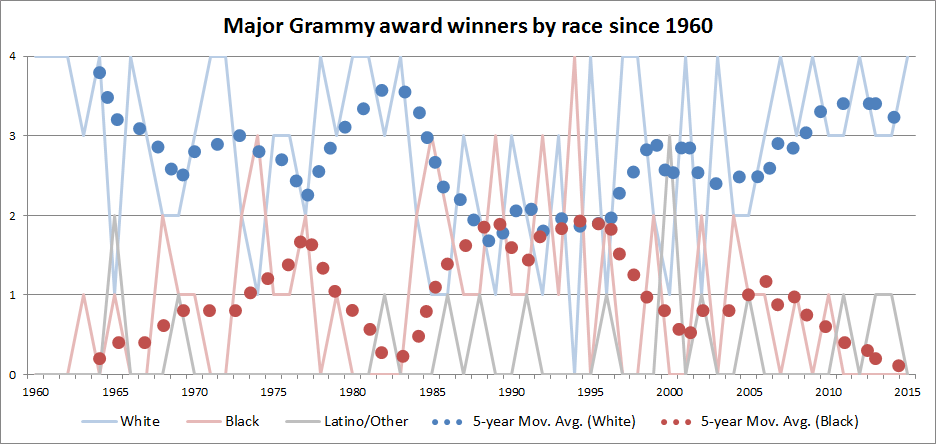
Kanye West was absolutely right about that thing he didn’t really say at the Grammys

It’s been almost a week since Kanye West did Kanye West things, pretending to interrupt Beck’s acceptance of the 2015 Grammy for Best Album, and then making some comments afterward critical of the Grammys and its respect of “artistry”. Continue reading “Kanye West was absolutely right about that thing he didn’t really say at the Grammys”

Less than 1 woman in 200 is in an occupation that earns more than her male counterpart

An analysis of Silicon Valley’s 2015 economy released this week by the think tank Joint Venture found that on average, women in the San Mateo and Santa Clara counties earned far less than men even when comparing similar educational attainment.

This wasn’t a surprising result, but the extent was: men in Silicon valley are paid 61 percent, or $34,000 more per year, than women when both have bachelor’s degrees, versus San Francisco proper (men are paid 20% more), California (41% more), and the U.S. as a whole (48% more), by the index authors’ measure.

Continue reading “Less than 1 woman in 200 is in an occupation that earns more than her male counterpart”

Guns don’t kill people, and backhoes don’t dig holes in the ground

On Wednesday, my post about the effect on suicides from widespread personal gun ownership in the United States got a fair bit of attention.

The title distracted a lot of readers from the content of the article, which isn’t surprising. Even for those who read it, there were a few common objections, which are collected here to be answered in more depth.

1. ARGUMENT: ‘The U.S. military doesn’t have a suicide problem. It’s actually lower than the general population when you consider most service members are 18 to 30 years old and male.’

Continue reading “Guns don’t kill people, and backhoes don’t dig holes in the ground”

The Second Amendment kills more U.S. soldiers than the Taliban

From 2010 to 2012, more people in the military died from suicide than any other underlying cause. Almost half were people shooting themselves in the United States with their private weapon.

Continue reading “The Second Amendment kills more U.S. soldiers than the Taliban”

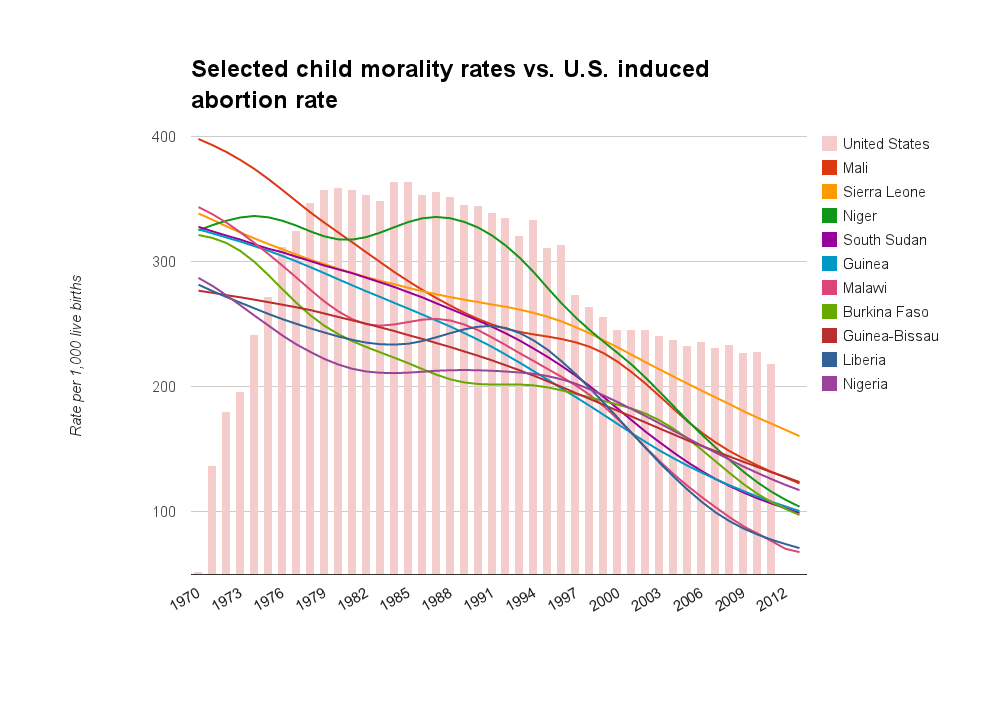
How do U.S. abortion rates compare to natural child mortality?

A focus on death is not an intentional feature of this space, but the topic of prenatal death came up recently based on a conversation with someone about the idea of abortion as genocide.

Since 1973, each year in the United States there have been about one million abortions, give or take. Add that up and you get a very big number that can be insensitively used to make comparisons with The Holocaust.

So to give that perspective the benefit of empathy, let’s assume for a moment that all abortions involve removing from life fully formed persons, able to experience pain and terror and happiness. If all abortions performed in the United States during the past 40 years were actually late-term abortions, how would that compare to being born in the developing world where the leading causes of death for children 5 and younger are pneumonia and diarrhea?   Continue reading “How do U.S. abortion rates compare to natural child mortality?”

Who is America’s deadliest Predator Drone pilot?

I’m not sure if that’s a question anyone knows the answer to, considering that no one knows how many people total have been killed in drone strikes, although it seems the Obama administration has used them more.

But it’s a cheeky title that goes to what director Michael Moore said about sniping in reference to Clint Eastwood’s American Sniper film about deceased Navy SEAL Chris Kyle.

That got negative attention, but strictly speaking, it’s true. Snipers didn’t used to be considered ‘real’ soldiers. According to the U.S. Army itself in 2002:

Continue reading “Who is America’s deadliest Predator Drone pilot?”

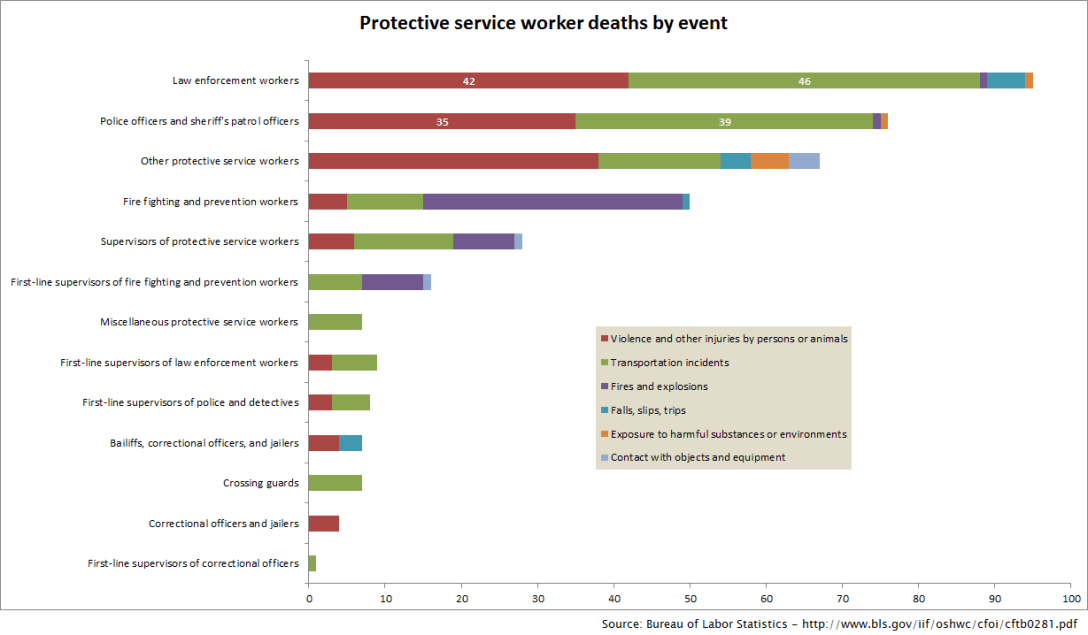
How often are prison guards killed transporting prisoners?

Eight prisoners and two correctional officers died in an accident near my hometown last week when their bus went off the side of an overpass, onto a moving train. It made national news, and my former coworkers did a great job all day letting people know what was going on as information came out, and putting it all into context by day’s end.

When hearing about a fatal train/prison bus collision, many people made the obvious connection, because that’s how we expect things to work, but the culprit seems to be icy conditions and very bad luck.

I can’t explain why the eight prisoner deaths seem so much more tragic than the two guards. Continue reading “How often are prison guards killed transporting prisoners?”